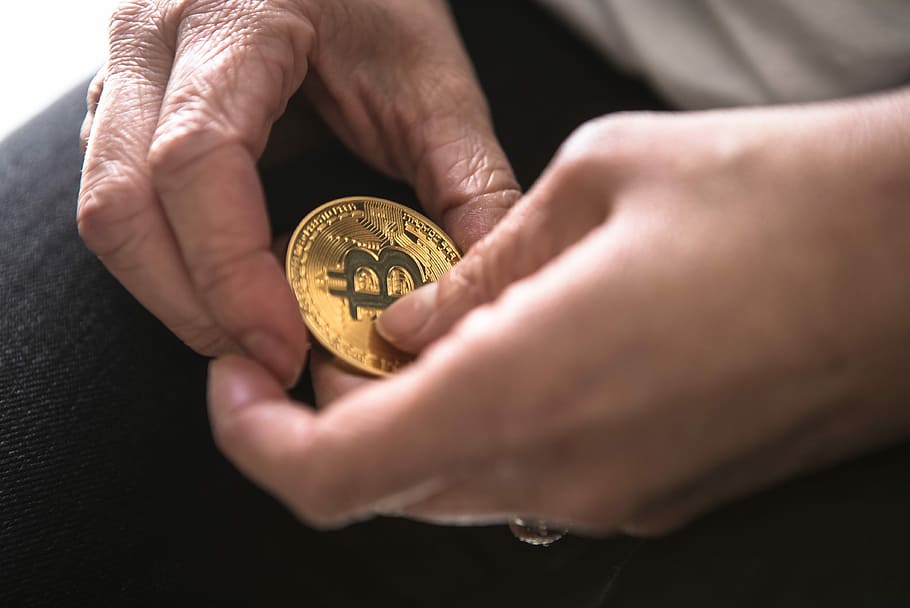

Bitcoin: The Digital Vanguard of Modern Finance
Introduction: The Dawn of a New Currency
In the hush of the late 2000s, when the world reeled from the aftershocks of a global financial crisis, an enigmatic entity under the pseudonym Satoshi Nakamoto released a white paper that would quietly ignite a revolution. This manifesto introduced Bitcoin — a digital currency unshackled from banks, governments, and traditional financial gatekeepers. Over a decade later, Bitcoin has evolved from a cryptic experiment into a symbol of financial autonomy and technological audacity.
Understanding the Essence of Bitcoin
At its heart, Bitcoin is deceptively simple yet profoundly complex. It is a peer-to-peer digital currency that enables transactions without intermediaries. This decentralization is made possible through blockchain technology — a public, immutable ledger maintained by a distributed network of computers called nodes.
Unlike fiat currencies, Bitcoin is not printed. Instead, it is mined — a process where powerful computers solve intricate mathematical puzzles to validate transactions and secure the network. The reward for this digital alchemy is newly minted Bitcoin, and crucially, the total supply is capped at 21 million coins. This finite supply introduces a deflationary quality absent in traditional money, which can be printed at will.
Bitcoin’s Rise: From Obscurity to Mainstream Attention
In its infancy, Bitcoin lingered in the shadows of internet forums and cryptography circles. Its first real-world transaction — the now-legendary purchase of two pizzas for 10,000 BTC in 2010 — is both a testament to its humble beginnings and a poignant reminder of its astronomical ascent in value.
Over time, what began as a fringe curiosity drew the attention of libertarians, technologists, and eventually, Wall Street. Institutional investors, who once scoffed at digital coins, now allocate billions to Bitcoin holdings, drawn by its potential as a hedge against inflation and an uncorrelated asset class.
Why Bitcoin Matters: Beyond Price Speculation
It is tempting to view Bitcoin merely through the lens of its volatile price swings, but to do so misses its broader implications. Bitcoin represents:
-
Financial Sovereignty: It enables individuals to hold and transfer wealth without reliance on centralized authorities. In regions with unstable governments or hyperinflationary currencies, Bitcoin can be a lifeline.
-
Transparency and Security: Every transaction is recorded on the blockchain, visible to all yet tamper-proof. This radical transparency contrasts starkly with opaque traditional banking systems.
-
Innovation Catalyst: Bitcoin has sparked an entire ecosystem of blockchain-based projects, from decentralized finance (DeFi) to non-fungible tokens (NFTs) and smart contracts.
Challenges and Criticisms: A Balanced Perspective
For all its promise, Bitcoin is not without flaws — and it would be naïve to romanticize it uncritically.
Key criticisms include:
-
Energy Consumption: Bitcoin mining is notorious for its massive energy demands, drawing criticism from environmentalists concerned about its carbon footprint.
-
Volatility: Its price can swing dramatically within hours, making it unreliable as a stable store of value for day-to-day use.
-
Regulatory Uncertainty: Governments worldwide grapple with how to classify and regulate Bitcoin, leading to a patchwork of laws that can shift overnight.
Nevertheless, these challenges have not dimmed its allure. Instead, they have spurred innovators to seek greener mining solutions, more user-friendly wallets, and frameworks for responsible regulation.
The Cultural and Psychological Impact of Bitcoin
Perhaps the most profound impact of Bitcoin is cultural. It has inspired a new breed of investors — the so-called “crypto-native” generation. For them, Bitcoin is not merely an asset but a statement. It is a bet against traditional finance, a wager that the internet should have its own currency untethered from nation-states and bureaucratic control.
Bitcoin has also birthed a new lexicon: HODL (a defiant misspelling of “hold”), whales (large holders of Bitcoin), and sats (short for Satoshis, the smallest unit of Bitcoin). These cultural touchstones reflect a community bonded by a shared belief that money, like information, wants to be free.
The Road Ahead: What Lies Beyond the Hype
Predicting Bitcoin’s future is an exercise in humility. Will it one day replace gold as the ultimate store of value? Or will it be outpaced by more energy-efficient cryptocurrencies and fade into obscurity as a pioneering relic?
What seems likely is that Bitcoin will continue to evolve alongside technology and regulatory landscapes. Nations may adopt frameworks that integrate Bitcoin into the broader financial system, or conversely, attempt to restrict its use. Meanwhile, technological advancements like the Lightning Network — designed to enable faster, cheaper transactions — could help Bitcoin transition from “digital gold” to a practical medium of exchange.
How to Approach Bitcoin as an Investor
For the modern investor, Bitcoin can be alluring yet intimidating. Those considering exposure should heed a few principles:
-
Educate Yourself: Understand how Bitcoin works, its risks, and its potential. Blind speculation seldom ends well.
-
Diversify: Bitcoin should be part of a balanced portfolio, not its entirety.
-
Secure Your Holdings: Unlike stocks, Bitcoin is self-custodied. Use reputable wallets and safeguard your private keys diligently.
Conclusion: A Symbol of Financial Reimagination
Bitcoin is not just code on a blockchain; it is a testament to humanity’s relentless drive to reimagine and rewire the systems that govern our lives. In an era when trust in traditional institutions is fraying, Bitcoin offers an alternative vision — one of decentralization, transparency, and empowerment.
Whether it ultimately fulfills its lofty ambitions or serves as a stepping stone to something greater, Bitcoin’s place in financial history is already assured. It stands as the digital vanguard of a movement that insists money should be as borderless, permissionless, and open as the internet itself.
In that sense, Bitcoin is far more than an investment; it is an idea whose time, it seems, has irrevocably come.