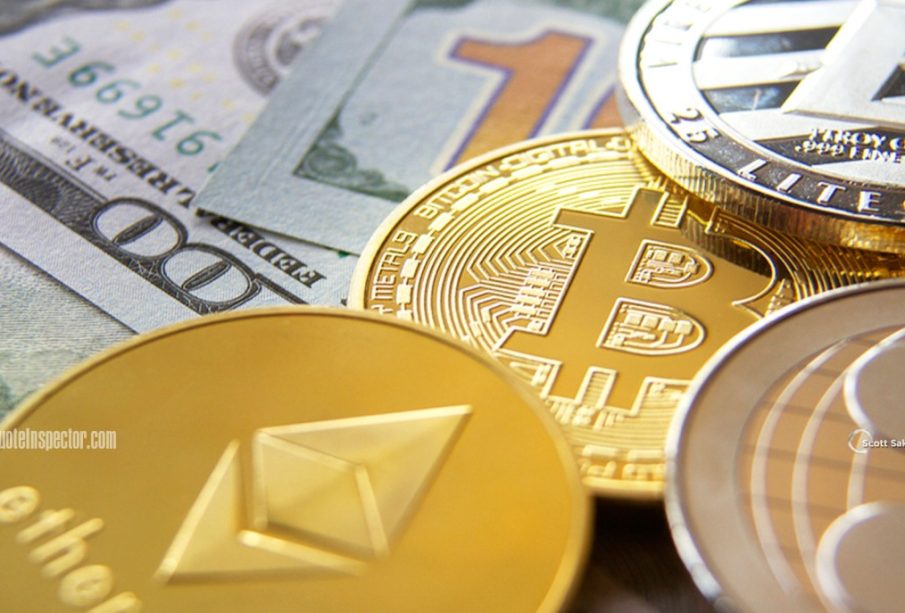
Over the past decade, cryptocurrency has swiftly transitioned from an obscure fascination among coders to a mainstream financial phenomenon. Once viewed with skepticism and confusion, digital currencies now command serious attention from institutional investors, central banks, and individual enthusiasts alike. What began as a bold experiment in financial autonomy is evolving into a seismic shift in how we perceive, use, and manage money. Cryptocurrency, in its purest form, is not merely about digital coins—it’s about reimagining the very foundations of trust, ownership, and economic freedom.
The Essence of Cryptocurrency
At its heart, cryptocurrency is a decentralized, digital form of money built on cryptographic technology. It operates independently of traditional banking systems and is typically powered by blockchain—a distributed ledger technology that records transactions across a network of computers. This ensures transparency, security, and, importantly, the removal of centralized control. The concept itself disrupts centuries-old financial models, challenging the monopoly of central authorities and intermediaries.
Fundamental Characteristics:
Decentralization: Control is distributed across a peer-to-peer network rather than being centralized in a single entity.
Immutability: Once a transaction is recorded on the blockchain, it cannot be altered or erased.
Transparency: All network participants can verify transactions, ensuring trust without third parties.
Limited Supply: Many cryptocurrencies, like Bitcoin, have capped supply, imitating precious metals like gold.
This foundational architecture underpins the philosophical and practical appeal of cryptocurrencies: financial self-sovereignty and borderless access.
A Closer Look at Bitcoin: The Trailblazer
Bitcoin, launched in 2009 by the enigmatic Satoshi Nakamoto, was the first cryptocurrency and remains the most well-known. Created in the wake of the 2008 financial crisis, Bitcoin was designed as an antidote to centralized banking and monetary policy manipulation. Its appeal lies in its simplicity and scarcity—only 21 million Bitcoins will ever exist. This fixed supply, coupled with increasing demand, has positioned Bitcoin as a digital store of value, often compared to gold.
Initially dismissed as an experiment, Bitcoin has since matured into a globally recognized asset. Its trajectory has been anything but linear, marked by speculative bubbles and breathtaking crashes, yet its resilience continues to affirm its staying power.
Ethereum and the Rise of Programmable Money
While Bitcoin introduced the world to decentralized currency, Ethereum expanded the possibilities by enabling programmable contracts. Launched in 2015, Ethereum brought forward the concept of smart contracts—self-executing agreements coded directly onto the blockchain. This innovation unlocked an entirely new dimension: Decentralized Applications (dApps).
Ethereum’s flexible and programmable infrastructure has catalyzed entire sectors, including:
Decentralized Finance (DeFi): Platforms that offer lending, borrowing, and trading without banks.
Non-Fungible Tokens (NFTs): Digital assets representing ownership of unique items, art, or collectibles.
Decentralized Autonomous Organizations (DAOs): Community-run entities governed by code and consensus rather than corporate structures.
In essence, Ethereum shifted cryptocurrency from being merely transactional to being transformational.
Why People Are Investing: Promise and Peril
The allure of cryptocurrency as an investment stems from its potential to deliver exponential returns, coupled with its revolutionary ethos. Early adopters of Bitcoin and Ethereum have seen unimaginable gains, prompting waves of retail and institutional investors to enter the market. Yet, the same volatility that drives profits can just as easily inflict substantial losses.
Key Motivations Behind Crypto Investment:
Speculative Potential: The prospect of rapid wealth generation continues to be a powerful magnet.
Inflation Hedge: With fiat currencies losing purchasing power, assets like Bitcoin are seen as a safeguard.
Portfolio Diversification: Crypto offers low correlation with traditional markets, appealing to sophisticated investors.
Technological Enthusiasm: Many are drawn by the innovation and ideology of decentralization and financial independence.
Risks to Acknowledge:
Regulatory Uncertainty: As governments strive to regulate the space, unpredictability remains a major concern.
Security Vulnerabilities: Although blockchain is secure, exchanges and wallets are frequent targets of cyberattacks.
Market Volatility: Prices can swing dramatically within hours, driven by sentiment, news, or manipulation.
Lack of Consumer Protection: Without centralized oversight, recourse in cases of fraud or loss is limited.
For every success story, there’s a cautionary tale—wise participation in this market demands education, patience, and risk management.
Global Regulation: A Balancing Act
The regulatory landscape for cryptocurrency remains fluid and complex. Nations are grappling with how to address digital currencies without stifling innovation. While some countries embrace crypto with open arms, others take a more cautious—or even prohibitive—approach.
Regulatory Approaches by Region:
United States: Focused on establishing clear frameworks, particularly around taxation and securities laws.
European Union: Pursuing the MiCA (Markets in Crypto-Assets) regulation to harmonize rules across member states.
Asia: A mix of enthusiasm and restriction; Japan recognizes Bitcoin as legal tender, while China has imposed sweeping bans.
Developing Nations: Some, like El Salvador, have adopted Bitcoin as legal currency, experimenting with national digital transformation.
Ultimately, regulation will be key in legitimizing the industry and protecting consumers—without suppressing the dynamism that makes crypto so compelling.
The Road Ahead: Cryptocurrency’s Expanding Role
Cryptocurrency is no longer a fringe movement—it is now woven into the global financial dialogue. From cross-border remittances to tokenized real estate and blockchain-based voting systems, its use cases are multiplying. Central banks are even exploring Central Bank Digital Currencies (CBDCs), further validating blockchain as a foundational technology of the future.
Future Trends to Watch:
Mainstream Adoption: Increasing retail usage, integration into financial apps, and acceptance by merchants.
Interoperability: Seamless movement of assets across different blockchains will enhance functionality.
Green Initiatives: As criticism mounts over energy usage, eco-friendly consensus mechanisms (like Proof of Stake) are gaining traction.
Financial Inclusion: For the unbanked and underbanked, crypto offers access to capital and services previously out of reach.
These developments indicate that cryptocurrency is not a passing trend—it is an evolving ecosystem that is steadily redefining the contours of modern finance.
Conclusion: A Digital Renaissance in Motion
Cryptocurrency represents far more than an alternative investment. It is a philosophical and technological reimagining of what money can be—autonomous, programmable, inclusive, and transparent. While risks persist and regulatory clarity remains a work in progress, the momentum behind crypto is undeniable.
Whether one chooses to embrace it as a hedge, a hobby, or a harbinger of the future, cryptocurrency demands attention, curiosity, and a willingness to question old paradigms. As we stand at the frontier of a digital financial renaissance, one truth becomes increasingly clear: the world of money is changing, and cryptocurrency is at the very heart of that transformation.